
When an injection molded part must perform in an aerospace, defense, transportation, energy, or industrial application, material selection is an important engineering decision. The right plastic must do more than fill a mold. It must maintain its strength, dimensions, and functionality throughout the expected service life of the part.
Engineering plastics help manufacturers meet demanding performance requirements by offering specific combinations of mechanical, thermal, chemical, and environmental properties. Depending on the application, engineers may evaluate materials for tensile strength, impact resistance, abrasion resistance, insulation, dimensional stability, or resistance to heat, moisture, UV exposure, and solvents.
However, there is no single material that is best for every application. The appropriate resin depends on the part design, operating environment, tolerance requirements, production goals, and assembly needs. Reliant Plastics helps customers evaluate these factors before production to support reliable, repeatable results.
Common Engineering Plastics Used in Injection Molding
Different polymer families provide different combinations of performance, processability, and cost. Material selection should always be based on the actual requirements of the application.
Nylon and Polyamide
Nylon, also known as polyamide, is widely used because it provides a useful balance of strength, toughness, abrasion resistance, and durability. Nylon can be used for mechanical components, housings, brackets, gears, bushings, and other parts that must withstand repeated loading or wear.
Glass-filled nylon can provide increased tensile strength, stiffness, and resistance to creep. However, reinforcement can also affect shrinkage, flow, and dimensional stability. These factors should be considered during part and mold design.
Polycarbonate
Polycarbonate is known for its high impact resistance and strength. It may be used for housings, protective covers, transparent or translucent components, and other applications where toughness and dimensional performance are important.
The part’s exposure to UV radiation, heat, chemicals, and repeated impact should also be evaluated before selecting a grade.
ABS
Acrylonitrile butadiene styrene, commonly known as ABS, is a tough and widely used thermoplastic. It offers good impact resistance, dimensional stability, and surface appearance for many housings, covers, and equipment components.
ABS may be appropriate when a project requires a balance of performance, appearance, and manufacturability. More demanding environments may require a higher-performance resin or a modified grade.
POM and Acetal
POM, also known as acetal, is recognized for its stiffness, low friction, dimensional stability, and wear resistance. It is often considered for moving components, gears, bushings, bearings, and parts that require tight tolerances and smooth operation.
POM can be sensitive to certain chemicals and processing conditions, so the intended environment and manufacturing requirements should be evaluated before the material is selected.
PBT and PET
PBT and PET may also be considered for connectors, housings, and other functional components requiring strength, dimensional performance, chemical resistance, or electrical insulation. Specific resin grades and reinforcement options affect the final performance of the molded part.
Acrylic and PMMA
Acrylic, or PMMA, may be selected for optical clarity, weatherability, and surface appearance in lenses, covers, displays, and similar components. Because it can be more susceptible to impact than some other engineering plastics, loading and operating conditions should be evaluated carefully.
PPS and Other High-Performance Thermoplastics
Polyphenylene sulfide, or PPS, provides strong chemical resistance, heat resistance, dimensional stability, flame resistance, and electrical performance. It may be appropriate for components exposed to aggressive chemicals, elevated temperatures, fuels, solvents, or demanding electrical environments.
For even more extreme requirements, manufacturers may evaluate high-performance materials such as PEEK or ULTEM®/PEI. Reliant’s advanced composites and engineered materials capabilities include support for high-performance thermoplastics and reinforced materials used in applications requiring strength, heat resistance, chemical resistance, flame performance, or reduced weight.
Material Properties That Affect Part Performance
The material selected for an injection molded part directly affects how that part behaves during production and use.
Mechanical Strength and Impact Resistance
A part may need to withstand tensile loads, compression, impact, vibration, or repeated movement. Material properties such as tensile strength, stiffness, toughness, and fatigue resistance help determine whether the part can perform under those conditions.
In some applications, reinforced engineering plastics can help reduce weight while maintaining the required mechanical performance. This makes them useful in metal-to-plastic conversion projects where designers are evaluating lighter alternatives to metal components.
Heat Resistance and Dimensional Stability
Elevated temperatures can cause some plastics to soften, deform, or lose strength. Long-term exposure to heat may also contribute to creep, which can affect the part’s dimensions and performance over time.
Engineering plastics may be selected for their heat resistance, heat deflection performance, and ability to maintain dimensional stability in changing temperature conditions. The design must also account for how the material expands, shrinks, and behaves during molding.
Chemical Resistance and Solvent Exposure
Parts used in industrial, aerospace, energy, and transportation applications may encounter fuels, oils, cleaning agents, coolants, solvents, or other chemicals. Chemical resistance helps reduce the risk of swelling, cracking, embrittlement, or premature material degradation.
The exact chemical, concentration, temperature, and exposure time all matter. A resin that performs well in one environment may not be suitable for another, which is why chemical exposure should be identified early in the material selection process.
Moisture, UV Exposure, and Environmental Conditions
Moisture absorption can affect the strength, dimensions, and processing behavior of certain polymers. UV exposure can also cause discoloration, surface degradation, or loss of mechanical performance in some materials.
Outdoor, aerospace, transportation, and industrial applications may require materials with improved resistance to moisture, weathering, or UV exposure. These requirements should be evaluated alongside part geometry, surface finish, and expected service life.
Flame, Smoke, and Insulation Requirements
Some applications require materials with specific flame, smoke, and toxicity performance. This is particularly important for aircraft interiors, rail vehicles, and other enclosed transportation environments.
Other components may require electrical insulation, dielectric performance, or resistance to high temperatures. In each case, the resin must satisfy the technical and application-specific requirements without creating unnecessary manufacturing challenges.
Material Selection Must Align with Part Design
Material selection and part design influence one another. A resin’s flow behavior, shrinkage, reinforcement, and processing temperature can affect wall thickness, gate locations, ribs, bosses, draft, tolerances, and mold design.
For example, reinforced materials may improve mechanical strength but can also introduce directional shrinkage or affect surface appearance. Materials with high temperature requirements may require different tooling or processing conditions. Parts with tight tolerances may require careful attention to shrinkage, warpage, and process control.
Reliant’s injection mold design and engineering team can evaluate material selection alongside part geometry, mold flow, wall thickness, gate location, and manufacturing requirements. This early engineering input can help identify potential issues before tooling is released.
How Engineering Plastics Support Different Applications
Engineering plastics are used across industries where molded parts must combine precision, durability, and consistent performance.
Applications may include:
- Aerospace interior components, housings, brackets, and structural parts
- Defense and military equipment
- Transportation and mass transit components
- Industrial enclosures and mechanical components
- Oil and gas seals, valve components, bushings, and connectors
- Electrical connectors, insulators, and protective housings
- Lightweight replacements for metal components
Engineering Support Beyond Material Selection
Selecting the right engineering plastic is only one part of producing a reliable, molded component. The material must also be processed consistently and integrated into the customer’s broader production and assembly requirements.
Reliant supports customers with:
- Design-for-manufacturability guidance
- Tooling and mold engineering
- Material selection for thermoplastics and advanced resins
- Mold flow analysis
- Scientific molding practices
- High-volume production
- Tight-tolerance manufacturing
- Secondary operations and assembly
- Metal-to-plastic conversion support
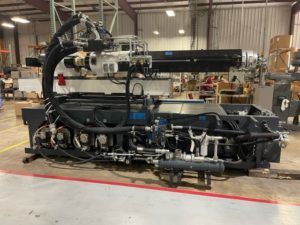
Reliant’s plastic injection molding services support projects from early design and engineering through production. The company operates 34 molding machines ranging from 38 to 950 tons and provides engineering, tooling, manufacturing, and logistics support.
Reliant also provides secondary operations such as trimming, CNC fabrication, ultrasonic welding, bonding, heat staking, painting, printing, inserts, and assembly when molded parts require additional work after molding.
Choose Reliant for Your Engineered Plastics
With more than 50 years of experience, ISO 9001:2015 and AS9100D certification, advanced resin capabilities, and engineering support, Reliant Plastics helps customers evaluate material selection and manufacturing requirements together.
Contact Reliant Plastics to discuss the material, part design, and injection molding process best suited to your application.